
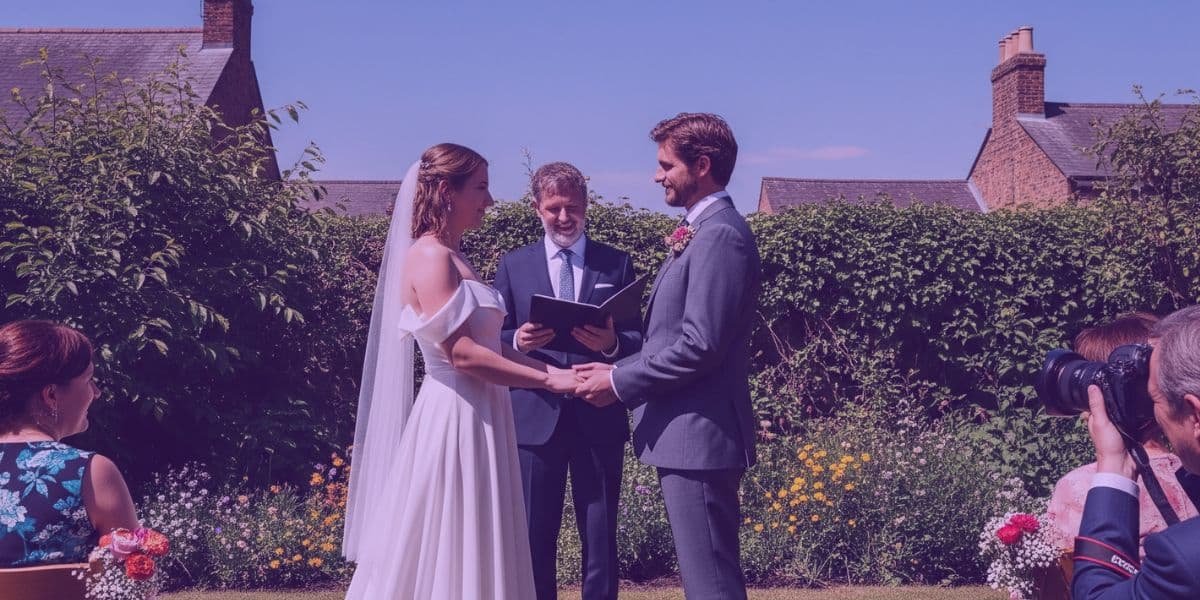
Non-ceremonial marriage is a unique type of legal union in Brazil, intended for urgent situations where one of the partners is facing imminent death and there is no time for the usual marriage procedures.
This article will discuss the key aspects of Nunocupative marriage, including its operation, legal criteria, necessary deadlines and formalities, the importance of witnesses, methods to prevent fraud, and its consequences.
The content was created with the legal expertise of Mauro Rodrigues Nunes, a Family Law specialist (OAB/SP 432.775) practicing in São Paulo, contributing valuable experience to the information provided.
To delve further into the topic of marriages and the various ways of sharing assets, also explore our articles on:
How can the distribution of assets be managed during a divorce?
Definition of Joint Property: What it entails, which assets are included, and which are not covered by the system.
How does a Nuncupative Marriage function?
Non-formal marriage is a special type of marriage allowed by the law for urgent situations, when one of the partners is facing imminent death and there is no time for a traditional marriage ceremony.
It serves as a legal document to protect the intentions of individuals during extreme emergencies, ensuring human dignity and upholding personal autonomy during times of vulnerability.
This type of marriage does not rely on the presence of an official authority, but necessitates following particular procedures for its legal recognition.
The nubents’ declaration of intent must be made verbally in front of a minimum of six unrelated witnesses to ensure impartiality and validity of the act.
Further formalization is crucial as per the specifications outlined in the Civil Code.
Article 1,540 of the Civil Code states that if one of the parties is in danger of life and cannot wait for the proper authority to conduct the marriage, it can be solemnized in the presence of six witnesses who are not closely related to the couple.
Nuncupative marriage must meet certain requirements and undergo judicial scrutiny to be legally recognized and have civil effects, despite being intended for urgent situations.
What are the conditions for a Nuncupative Marriage?
Compliance with particular legal requirements is necessary for nuncupative marriage to be legally valid.
One of the partners must face a real and immediate risk of death, which makes it necessary to skip the usual procedure.
Marriage must be conducted verbally in the presence of six witnesses who are not closely related to the couple.
These witnesses are crucial as they will be in charge of reporting and verifying the execution of the action to the appropriate authority.
Witnesses must attend the competent judgment within 10 days of the marriage, as stated by law, but flexibility has been allowed in certain cases.
The judicial record of marriage will be needed at this moment to be valid for civil matters.
If the endangered spouse survives, they can officially validate the marriage by appearing with witnesses before the appropriate authority and civil registry officer, thus strengthening the legal validity of the union.
Failure to adhere to any of these aspects could jeopardize the legitimacy of the spoken marriage, highlighting the necessity for strict observance of formality, even if it is uncommon.
How to prevent fraud and fake Nuncupative Marriages?
Strict adherence to legal obligations is crucial in order to minimize these vulnerabilities.
Lawyer Mauro Rodrigues Nunes emphasizes the significance of witnesses appearing voluntarily and without influence to ensure the sick person’s will is authentic and free from coercion.
It is crucial that:
- Witnesses are not related to the couple getting married, as mandated by the law.
- It is advisable to have a thorough documentation of the bridegrooms’ oral statements, particularly regarding the sick person’s level of clarity, utilizing audiovisual recordings or medical reports if feasible.
- Judicial approval takes place within the specified ten-day period through the testimony of witnesses and examination of the situation surrounding the event.
The surviving spouse may formally ratify the marriage in the future if they recover, further establishing the legitimacy of the union.

Implications of Nuncupative Marriage Leading to Success
Marriage, as required by law, has complete legal consequences, such as inheritance rights, if it is officially acknowledged by the court.
Even if one of the spouses dies before the formal legal process, the marriage will still be considered valid from the date of the verbal ceremony, known as retroactive effect.
This insight is supported by lawyer Mauro Rodrigues Nunes’ analysis, which emphasizes that retroactivity ensures the financial security of the surviving spouse, granting them the inheritance rights essential to their status as an heir, even if the process is completed after the deceased’s passing.
The judicial procedure must adhere closely to the guidelines outlined in Article 1.541 of the Civil Code, including witness testimony, the involvement of the Public Prosecutor, and assessment of the legal capacity of the individuals intending to marry.
In case of fraud, forgery, or lack of understanding of the patient, the document can be invalidated under Articles 166, VI, and 167 of the Civil Code.
The main consequence that follows is evident: a nuncupative marriage, once legally confirmed, grants the surviving partner complete succession rights, along with all related consequences, such as financial ones.
Check the regulations, distinctions, and legal processes concerning unclaimed estates.
Requirements and procedures to formalize a Nuncupative Marriage
The legal requirement for witnesses to appear is within ten days.
They need to confirm the marriage by stating that they were present at the ceremony, one of the partners was seriously ill, and both agreed to marry of their own accord.
There is a legal provision for a ten-day period, but it is understood in jurisprudence that this period can be flexible in certain cases.
The time limit for registering a marriage is typically 10 days, but there is a recent STJ ruling that provides some flexibility in this regard, as explained by lawyer Mauro Rodrigues, a specialist in the field.
The Superior Court of Justice accepts this interpretation, stating that it is permissible to register outside the legal timeframe as long as all other legal conditions are met and the authenticity of the union and urgent circumstances are verified.
Witnesses are needed to validate the Nuncupative Marriage.
This type of arrangement is considered valid under Article 1,540 of the Civil Code only if it is conducted in the presence of six witnesses.
- Read and compose.
- They do not have any blood relation in a direct or second-degree collateral line with the individuals getting married.
The need for this rule is explained by the desire to prevent fraud and avoid conflicts of interest that could lead to potential deceit.
According to Article 1,539 of the Civil Code, also known as Art. 1,539, additionally:
Article 1,539 of the Civil Code states that in situations of serious illness of one of the spouses, the marriage can be solemnized by the official where the ill party is, even if it is urgent and at night, with two literate witnesses present.
This device allows for marriages to be celebrated outside the office with fewer witnesses in emergencies, with registrations to be done as per § 2.
The term avulsed, washed by the designated official, must be documented in the appropriate record within five days, in the presence of two witnesses, and then filed.
Witnesses in nuncupative marriage play a crucial role in both a formal and substantial capacity. They are necessary to confirm the intentions of the couple getting married and to offer legal backing for the official recording of the marriage.
Bibliography
GONÇALVES, Carlos Roberto authored “Brazilian Civil Law, Family Law” in volume VI.
What does a caring marriage entail?
It is a type of marriage that is verbally conducted when one of the individuals is in danger of imminent death, without an official celebrant present, but with six witnesses.
What are the conditions for a nuncupative marriage?
The brides’ verbal statements are urgently needed due to the risk of death, along with the presence of 6 witnesses who are not closely related, followed by a judicial record within 10 days, typically.
When is the latest date to register an oral marriage?
In certain situations, the court may adjust the ten-day period following the event when witnesses are required to appear in court.
How many witnesses are required?
Six literate witnesses, who are not directly related to the brides, are present.
Is a nuncupative marriage legally valid even without prompt registration?
Yes, it can be approved by a court, with the presence of witnesses and consideration of the circumstances.
Is it feasible to receive inheritance without immediate registration?
If a marriage is legally recognized, the civil consequences apply retroactively to the date of the verbal celebration, ensuring certain rights to the surviving spouse.
Can a verbal marriage be voided?
If it is proven that a patient has engaged in simulation, fraud, or lack of lucidity, they can be held accountable under Articles 166 and 167 of the Civil Code.
Can the witnesses be family members of the groom?
The Civil Code prohibits relatives up to the second degree of kinship in order to guarantee fairness.
Can the surviving spouse verify the marriage at a later time?
If the ill bridegroom recovers, he can officially validate the marriage before the appropriate authority, enhancing its legitimacy.
