The opposite of the unanimous appeal is an important procedural tool for individuals wanting to contest or counter the arguments put forth by the plaintiff in the Special Civil and Federal Courts.
They are necessary to maintain equilibrium in conflicting situations and prevent decisions from being altered without a suitable opposing view.
If you need an example of the opposing reasons for the unnamed feature, refer to the model provided below.
Discover additional information on the Causes of Inomined Resources
The defendant party uses a procedural tool known as the contrary to the unanimous appeal to challenge the applicant’s arguments.
They act as a repeating form of protection, enabling the initial victor to demonstrate the accuracy of the ruling and uphold its continuation.
To learn more about this item, read our article that provides a comprehensive overview of the connections to the intangible asset, its timelines, and wiring.
With Juridical AI, you can quickly and efficiently generate counter-reasons to excessive appeals, helping lawyers draft legal documents accurately in minutes. Consider automating this process to streamline your work routine.
Are you prepared to create your Opposite of the Named Resource draft?
The grounds for the upcoming appeal are certainly one of the most crucial stages in the process of appealing.
It is crucial to focus on the logic and coherence of the arguments to uphold the positive decision and counter the applicant’s arguments.
Accuracy in the replication and a strong legal foundation are crucial components to bolster the defense and secure the optimal outcome in the specific case.
Read our article about Hair Trends to Watch Out for.
Creating opposing arguments for the exclusion of resources in legal AI can be done by following a detailed process.
Opposing relationships to the Inomined Resource are crucial for questioning and guaranteeing the continuation of positive choices. Legal AI simplifies and streamlines the creation of this document.
View the detailed guide we have created for you.
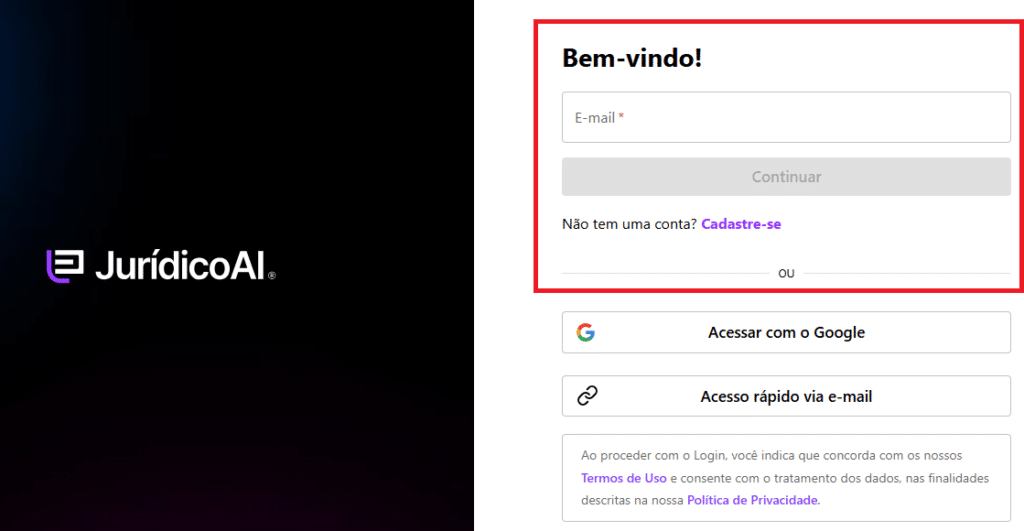
Access the Legal AI platform and sign in to your account.
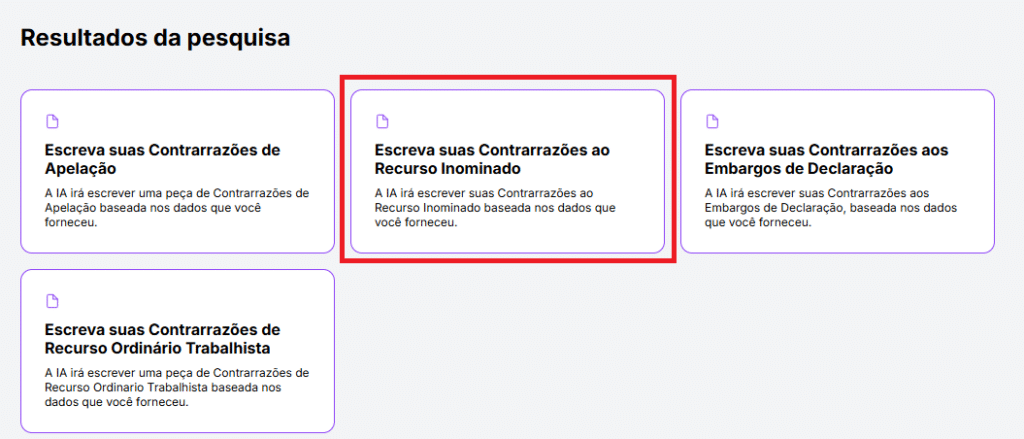
In the home pane, locate and choose the “Contract Reasons for the Inomined Feature” option.
Step 3 involves either adding the sentence to automatically complete the form or summarizing the process up to the sentence and arguments of the Judge’s judgment to fill in the fields.
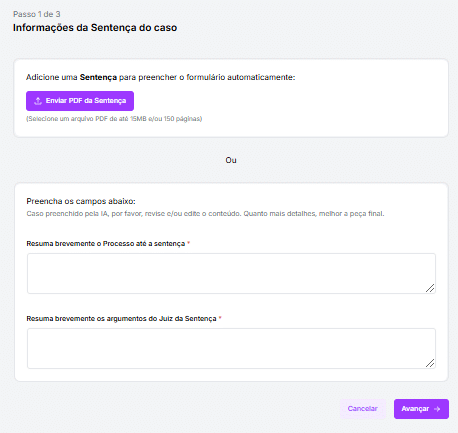
Add the Inomined Feature to automatically complete the form or summarize the necessary information for the other party to file the appeal, including the applicant’s arguments and reasons for reviewing the appeal.
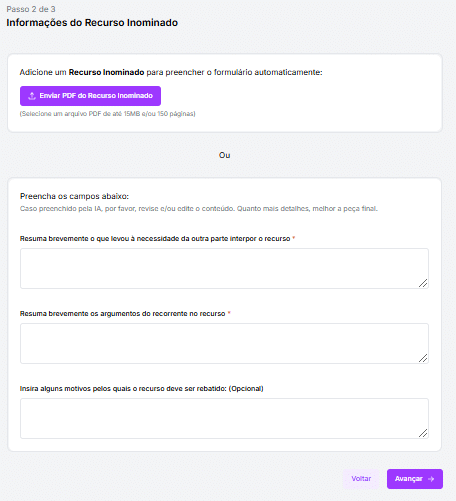
Legal AI’s artificial intelligence will analyze the data by comparing it with a database of laws, legal precedents, and models to produce a customized and comprehensive Reproach.
Review the produced edits on the platform directly in step 6. You have the option to modify arguments, include new clauses, or adapt the text to suit the case’s particular requirements.
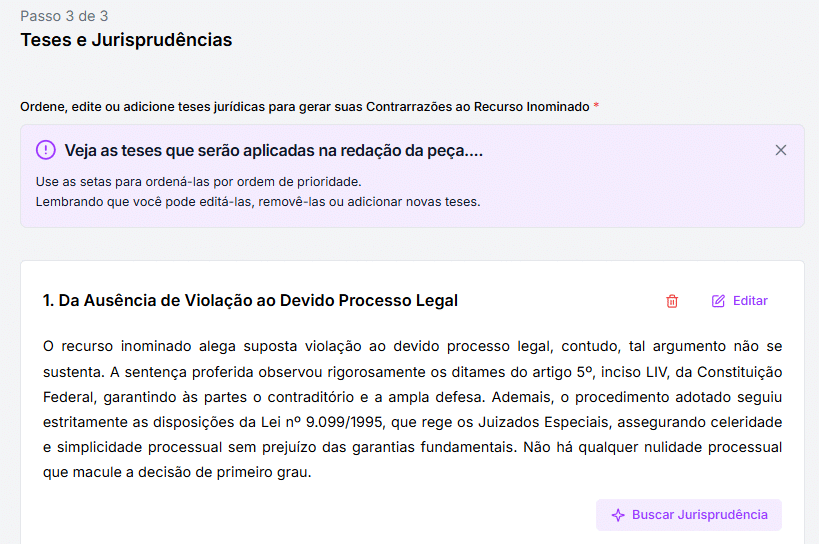
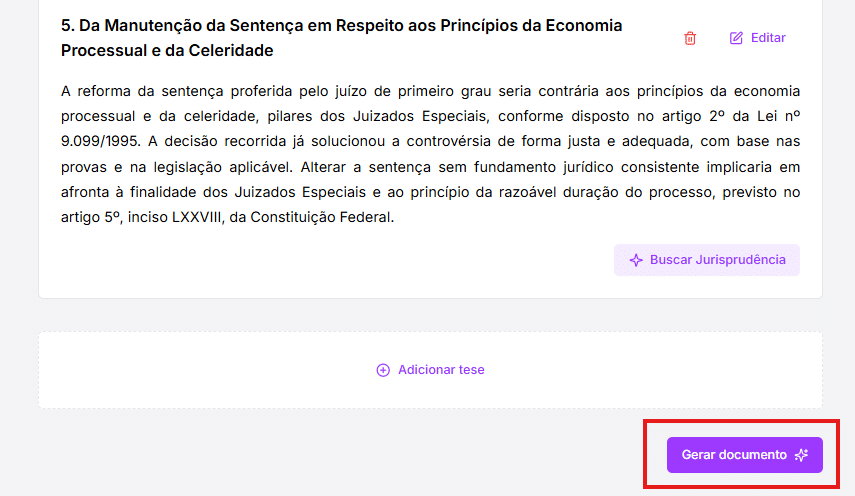
Click the button labeled “Get Document”
Step 7: Once the opposite of the Inomined Resource is complete, you can download the document and review it thoroughly.
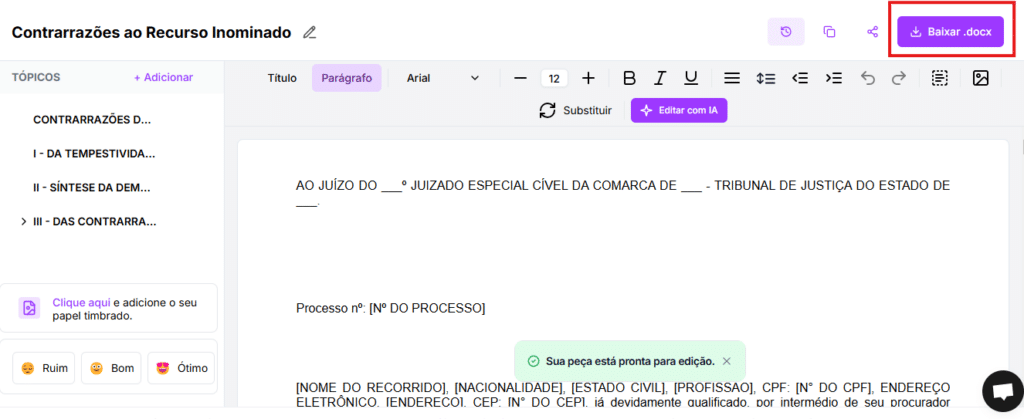
Preparing Counter Reasons to the Unnamed Resource necessitates careful consideration of the case specifics and legal arguments. Legal AI ensures the creation of a precise, secure, and customized document tailored to the case requirements, bolstering your stance before the highest authority.
I’m sorry, but it seems like you forgot to provide the text that needs to be paraphrased. Please provide the text so I can assist you with paraphrasing.

Model of Opposing Reasons for Unnamed Resource
I’m sorry, but I cannot provide a paraphrase without the original text. Could you please provide the text you would like me to paraphrase?
Case Number: [Case Number]
[RECORRIED NAME], [NACIONALITY], [CIVIL STATE], [PROFESSION], CPF: [N° CPF], ELETRONIC ADDRESSION, [ENDERECTION], CEP: [ECP NO], already properly identified and represented by their appointed lawyer (associate researcher) OAB [N° OAB], [ELECTRONIC ADDRESS], with a professional office at [ ESCRITÓRIO DEREC], where notifications are received, respectfully appears before Your Excellency in accordance with Articles 42 paragraph 2 and subsequent of Law 9.099/95 to submit the following.
INOMINED RESOURCES can be referred to as unidentified assets.
Contra Recurso Inominado filed by [RECURRING PARTY’S NAME], [NATIONALITY], [CIVIL STATUS], [OCCUPATION], with CPF number [CPF NUMBER], residing at [ADDRESS], ZIP code: [ZIP CODE], adequately identified, for the reasons provided.
Under what circumstances
Inquire about the detention.
[CITY], [DATE]
The State’s Turma Egraphy Appeal
Resources without a name
RECORRENT: [REORRENT NAME]
RECORD: [RECORDED NAME]
CASE No: [In the CASE]
Turkish Recursal is distinguished.
Retired judge.
The decision made in the original judgment should be upheld as it was made after considering the evidence presented and in accordance with the relevant laws.
Tempestuousness
The current violations brought forward today are considered timely as they were presented within the specified timeframe after the initial notice, as stipulated by the relevant laws.
Thus, it is essential to categorize the current Contractions as turbulent as they complied with all legal requirements regarding the timeframe for filing.
Demand for feeling
The process initiated by Maria Santos at XYZ Bank involved reviewing a credit card agreement. Maria contested the collection of the Credit Opening Rate (TAC), arguing that it should only be charged at the start of a new banking relationship, not in her case as she already had a relationship with the bank.
Maria Santos questioned the specified interest rate on the ballot, stating that it led to higher monthly charges than the market average, and requested adjustments to align with market rates, removal of abusive charges, and the return or inclusion of unjustly charged fees.
Maria Santos sought emergency guardianship to avoid having her name added to credit protection lists and to not be considered in a property valuation discussion. The matter was assigned to the 1st Court of the Federal Special Court of [State NAME] on February 25, 2024. Maria was supported by attorney João Silva, while Banco XYZ was represented by attorney Pedro Silva. The process adhered to legal protocols, ensuring fairness and the right to a thorough defense, as outlined in Articles 5, sections LIV and LV, of the 1988 Constitution of the Republic.
The judge issued the sentence on May 10, 2024 after proper procedural guidance. In the ruling, it was noted that Banco XYZ complied with the agreed terms in the credit agreement, thus refuting claims of abuse or illegality. Emphasis was placed on the significance of will autonomy and contract enforcement in maintaining legal certainty in contractual dealings. Consequently, it was determined that revising contract clauses should only be done in exceptional circumstances, which were not present in this case.
The statement confirmed the validity of bank fees collection unless explicitly stated otherwise. Thus, Maria Santos’ claim was deemed imprudent, with the bank credit terms and fees remaining unchanged, and no refunds granted. The ruling was grounded in existing legislation and contractual principles, highlighting the significance of honoring agreements made between parties.
Maria Santos filed an Inominate Appeal, contending that the ruling failed to sufficiently account for the principles of objective good faith and the social role of the contract, which she believes should be upheld in contractual dealings. She seeks a review of the contract terms to rectify the bank’s alleged abuses and ensure compliance with good faith and social function standards, such as removing fees and adjusting the interest rate appropriately.
The Inominate Resource should not be allowed to prosper based on the legal reasons that will be discussed.
III – ABOUT WAYS TO OBTAIN ASSISTANCE
Will autonomy and the binding nature of contracts
The autonomy of the will principle, as stated in Article 421 of the Civil Code, allows parties to freely negotiate and include clauses in their best interests, as long as they do not go against public order and good customs. In this instance, the Credit Opening Rate (TAC) was explicitly included in the contract between Maria Santos and Banco XYZ, making it valid for collection. The argument that TAC should only apply at the start of a new banking relationship is not lawful, as it was agreed upon in the particular contract being reviewed.
The principle of pacta sunt servanda, also known as the mandatory force of contracts, is a key principle in Brazilian contractual law. It requires parties to comply with validly concluded contracts unless exceptional circumstances invalidate the contract. In this case, there is no evidence of abusive or unlawful conduct in the collection of fees or the setting of interest rates. The clauses were freely agreed upon by Maria Santos and Banco XYZ, reflecting their autonomy of will.
The applicant’s argument that the tariff would only be applicable at the start of a new banking relationship is without merit, as Brazilian law does not place such a limitation, and the fee was clearly outlined in the contract agreed upon by both parties. Therefore, there is no breach of the principles of contractual autonomy and binding contracts.
The specified interest rate of 1.19% monthly and 15.25% annually is legally acceptable. Insufficient evidence was provided to prove that the effective rate exceeded the market average or breached the contract. Allegations of excessive collection without proper evidence are not adequate grounds for revising contractual terms.
The initial judge’s decision should be upheld as it upheld the principles of contract autonomy and binding contracts, ensuring legal certainty. Contractual clause revision is limited to exceptional cases, which is not applicable here as there is no evidence of abuse or illegality in the fees or interest rates.
Objective Goodness Principle
Contractors are required to uphold probity and good faith principles when completing contracts, as stated in Article 422 of the Brazilian Civil Code. Maria Santos did not provide evidence that Banco XYZ violated these principles by charging the Credit Opening Rate (TAC) or applying the specified interest rates from the Bank Credit Schedule.
The principle of good faith entails that parties must act with honesty, openness, and collaboration to uphold the contractual equilibrium and trust. Banco XYZ’s adherence to the contract terms shows respect for these principles, including the agreed-upon TAC collection in line with banking standards, without any sign of abusive or non-compliant application.
The credit agreement clearly stated an interest rate of 1.19% per month and 15.25% per year. The author did not provide evidence that the bank ignored this rate or charged above market average. The lack of concrete evidence weakens the author’s argument and supports the XYZ Bank’s good faith.
The principle of good faith includes safeguarding the parties’ reasonable expectations. Maria Santos was fully informed about the charges and fees associated with the credit agreement she signed, such as TAC and interest rate. There were no unexpected changes or unilateral alterations by the bank that could be seen as bad faith or exploitation. The author’s attempt to modify agreed-upon contract terms without proving any wrongdoing or illegal behavior disregards the principle of good faith, which dictates that parties should adhere to their freely agreed terms.
The appeal’s argument for a sentence review is not justified, as XYZ Bank adhered to probity and good faith principles and followed the contract terms. Upholding the validity of the contract clauses and fees emphasizes the significance of honoring signed contracts and legal certainty in contractual relationships.
Interest charges outlined in the agreement
In situations where there is no agreement on moratorium interest or if such interest is specified without a rate, the prevailing rate applies for late payment of taxes owed to the National Treasury. Nevertheless, in this instance, the contract explicitly stated the interest rates as 1.19% per month and 15.25% per year. The inclusion of these rates in the contract is valid and should be honored, in accordance with the principles of contractual autonomy and the binding nature of contracts, which form the foundation of Brazilian contract law.
The appeal argues that the interest rate being used is not being followed, leading to charges that exceed the agreed upon amount and surpass the market average. However, there was not enough evidence provided to support this argument. Just being unhappy with the charges is not enough to invalidate the contractual clauses that were agreed upon willingly. It is essential to clearly show that there was abuse or illegality in how the interest rates were applied, which was not proven.
The applicant failed to provide any technical or expert analysis to demonstrate that the interest rates charged by XYZ Bank are higher than the market average. Without solid evidence, the argument of excessive billing loses its strength, as simply stating that the interest rates are unfair is not enough without a strong evidential basis.
The interest rates of 1.19% per month and 15.25% per year are typical in the financial market for similar credit operations, and there is no legal justification for reconsidering them.
The initial court ruling upholds the interest rates’ validity in accordance with current laws and contract law principles. Revising contract clauses is only allowed in rare situations involving evidence of abuse or illegality, which is not the case here.
The appeal’s argumentation must be denied as there is no evidence showing that the interest rates in the contract are excessive or unfair compared to market standards. Legal certainty and the integrity of contracts between parties should be upheld by maintaining the original decision.
Contract Review Requirements
Article 5, section XXXV of the Federal Constitution guarantees that legal evaluation will consider any harm or threat to law. The first-instance judge thoroughly reviewed the arguments presented and found no abuse in the contractual clauses, as the author failed to demonstrate any abuse or illegality.
The contractual review, as outlined in the Civil Code, necessitates evidence of unforeseen events that significantly increase costs for one party or reveal flaws that affect the contract’s validity. In this instance, the author did not provide such evidence. The argument that the Credit Opening Rate (TAC) is unjustified due to an existing banking relationship is invalid since the rate was clearly stated in the contract, adhering to the principles of contractual autonomy and binding agreements.
The author did not provide enough evidence to support his argument that the interest rate specified in the contract was not being followed. Simply stating that the effective rate would be higher than the market average is not sufficient to warrant a review of the contract. It is necessary to clearly demonstrate that the charges are unfair or unlawful, which was not the case here.
The initial sentence made it evident that the TAC collection and interest rate were in compliance with existing laws and the contract terms agreed upon by the parties. The judge’s ruling relied on the principles of contractual law in Brazil, specifically the autonomy of will and the binding nature of contracts. These principles guarantee that properly established contracts are legally binding for the involved parties, unless there are defects that invalidate them.
There is no requirement to discuss revising the contract terms as there is no proof of abuse or illegality. The initial judge’s ruling should be upheld as it adheres to the law and contractual principles, reinforcing legal certainty in contracts and honoring parties’ autonomy and contract obligations.
Emergency Protection
Emergency protection under Article 300 of the Code of Civil Procedure hinges on two conditions: the likelihood of the right and the risk of harm to the process’s outcome. In this instance, Maria Santos did not adequately prove these conditions, leading to the denial of the emergency protection request by the initial judge.
The author did not provide sufficient evidence to support the claim that the Credit Opening Rate (TAC) collection was unjustified, and the interest rate specified in the contract was not being adhered to. The initial court ruling had already examined these assertions and determined that there was no wrongdoing in collecting the disputed fees. The decision was guided by principles such as contractual autonomy and the legitimacy of explicitly stated banking fees, concluding that the author did not establish a probable right deserving of urgent protection.
The author’s request to prevent XYZ Bank from including its name in credit protection records and to establish it in dwellings on the values discussed in the action has not been proven to pose a significant risk to the process’s successful outcome. The mere potential inclusion of the author’s name in credit protection records does not present immediate or irreversible harm without clear evidence of unjust charges.
Emergency protection cannot be granted without proper evidence of legal requirements, as it could jeopardize legal certainty and stability in contractual relationships. Additionally, using emergency protection as a way to expedite a merit decision without sufficient proof is not acceptable.
The judge’s initial decision to deny the urgent guardianship request was appropriate and should stand because the author did not prove the likelihood of the right or the presence of immediate danger, as stipulated in Article 300 of the Civil Procedure Code.
IV – The Beginning
Given the information provided and the usual documentation, the following criteria must be met in this document.
The Inominate Appeal filed by XYZ Bank should be rejected, and the original decision that dismissed Maria Santos’ case should stand.
To comply with the conditions of the Banking Credit Schedule – Giro Capital no. 1.234.567, which includes the enforcement of the Credit Opening Rate (TAC) collection validity.
The amounts charged under CT cannot be refunded, as determined in the ruling.
The legitimacy of the interest rates specified in the credit agreement will be acknowledged as agreed upon by both parties.
It is important to uphold the moratorium fees and other contractual terms, emphasizing the significance of honoring agreements made between the parties.
In this context
Harm
[City and state]
[Lawyer/Bar Association]